
Generative AI Ethics Rules and Court Policies for Lawyers by Jurisdiction
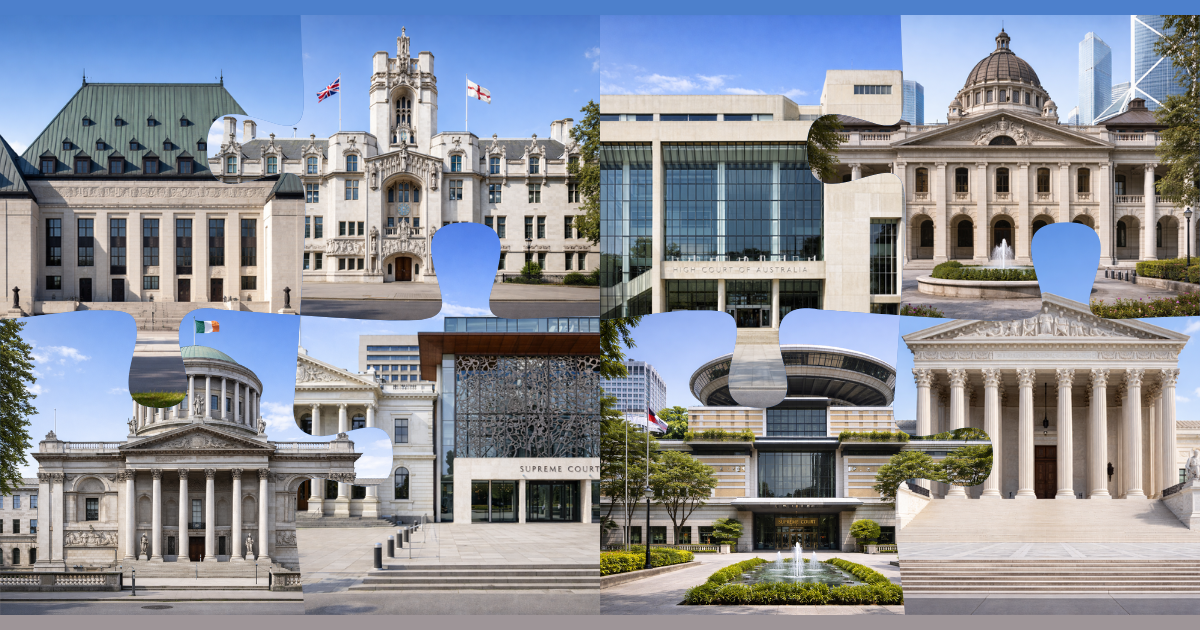
🇨🇦 Canada
Law Societies — Provincial & Territorial Guidance
| Province / Territory | Organization | Resource | Date | Notes |
|---|---|---|---|---|
| Alberta | Law Society of Alberta | The Generative AI Playbook | January 2024 | Comprehensive playbook on ethical AI use. |
| British Columbia | Law Society of BC | Guidance on Professional Responsibility and Generative AI | 2024 | Focuses on ethics, competence, and confidentiality. |
| Manitoba | Law Society of Manitoba | Generative Artificial Intelligence (AI) Guidelines | April 2024 | Guidelines for responsible AI integration. |
| Newfoundland & Labrador | Law Society of NL | Artificial Intelligence in Your Practice | Ongoing | Light advisory on practical AI considerations. |
| Northwest Territories | Law Society of the NT | Guidelines for the Use of Generative AI in the Practice of Law | January 2025 | Ethical guidelines for AI tools. |
| Nova Scotia | Nova Scotia Barristers' Society | AI Guide for Legal Practices in Nova Scotia | July 2025 | Guide to promote responsible and ethical use of AI. |
| Nova Scotia | Nova Scotia Barristers' Society | Artificial Intelligence in the Practice of Law | December 2023 | Practical guide for assessment and use. |
| Ontario | Law Society of Ontario | White Paper: Licensee Use of Generative Artificial Intelligence | April 2024 | White paper on professional obligations. |
| Prince Edward Island | Law Society of PEI | Artificial Intelligence Guidelines | 2024 | General guidelines for AI in practice. |
| Quebec | Barreau du Québec | Guide pratique pour une utilisation responsable de l'IA générative (French only) | October 2024 | Practical guide for responsible generative AI use. |
| Saskatchewan | Law Society of Saskatchewan | Generative Artificial Intelligence Guidelines | February 2024 | Guidelines emphasizing verification and ethics. |
| Saskatchewan | Law Society of Saskatchewan | Using GenAI Tools to Obtain Legal Information | June 2025 | Quick guide to obtaining legal information using AI. |
| Saskatchewan | Law Society of Saskatchewan | GenAI: Highlights from a Bite Size CPD Series | August 2025 | Guideline on precise prompts when using AI. |
Additional Ontario LSO practice resources
National resources:
- Canadian Bar Association – Ethics of AI for the Legal Practitioner (collates Canadian and International guidance)
- Canadian Association of Law Libraries – AI in Legal Research and Writing Applications (October 2025)
- Lawyers Indemnity Fund – Generative AI: What Lawyers Need to Know (November 2023)
Courts and Tribunals
| Court / Tribunal | Resource | Date | Notes |
|---|---|---|---|
| Canadian Judicial Council | Guidelines for the Use of Artificial Intelligence in Canadian Courts | September 2024 | National guidelines for AI in judicial processes. |
| Federal Court | Interim Principles and Guidelines on the Court's Use of Artificial Intelligence | September 2025 | Interim principles for court AI use. |
| Federal Court | Notice to the Parties and the Profession – The Use of AI in Court Proceedings | May 2024 | Notice on AI in proceedings. |
| Federal Judicial Affairs | Use of AI by Courts to Enhance Court Operations | November 2024 | Enhancing operations with AI. |
| Federal Judicial Affairs | Use of AI by Court Users to Help Them Participate in Court Proceedings | November 2024 | General guidelines on AI use by court users. |
| Federal Public Sector Labour Relations and Employment Board | Practice Direction: Use of Artificial Intelligence (AI) in Board Proceedings | January 2026 | General guidelines on AI use by board users. |
| Canada Industrial Relations Board | No. 12 – Policy on the Use of Generative Artificial Intelligence | November 2025 | Must declare use of AI to board; responsible for submission. |
| Alberta Tri-Courts | Notice to the Public and Legal Profession – Ensuring Integrity of Court Submissions When Using LLMs | October 2023 | Practice direction for responsible AI use. |
| BC Court of Appeal | Registrar's Filing Directive – Court of Appeal Act, s. 38 | September 2025 | General guidelines on AI use by court users. |
| BC Property Assessment Appeal Board | Participant Code of Conduct | April 2025 | Must disclose that AI was used. |
| Manitoba Court of King's Bench | Practice Direction: Re: Use of Artificial Intelligence in Court Submissions | June 2023 | Must advise court of how AI was used. |
| Newfoundland and Labrador Supreme Court | Notice to the Profession and General Public: Ensuring the Integrity of Court Submissions When Using LLMs | October 2023 | Practice direction for responsible AI use. |
| Northwest Territories Supreme Court | Notice to the Public and Practice Direction: The Use of AI in Court Proceedings | October 2025 | Practice direction for responsible AI use. |
| Nova Scotia Supreme Court | Ensuring the Integrity of Court Submissions When Using Generative AI | February 2025 | Practice direction for responsible AI use. |
| Nova Scotia Provincial Court | Use of AI and Protecting the Integrity of Court Submissions in Provincial Court | October 2023 | Must advise court of how AI was used. |
| Ontario Superior Court of Justice | New Practice Direction on Responsible Use of AI in Court Proceedings | February 2026 | Practice direction for responsible AI use. |
| Ontario Tribunals | Practice Direction on the Use of AI in Tribunal Proceedings | April 2025 | Direction for responsible AI use. |
| Ontario Human Rights Commission | Principles for the Responsible Use of Artificial Intelligence | January 2026 | Guidelines for use of AI in line with privacy and human rights obligations. |
| Quebec Court of Appeal | Notice Respecting the Use of Artificial Intelligence Before the Court of Appeal | August 2024 | Practice direction for responsible AI use. |
| Quebec Superior Court | Notice to Profession and Public: Integrity of Court Submissions When Using LLMs | October 2023 | Practice direction for responsible AI use. |
| Quebec Courts | Notice to the Legal Community and the Public | January 2024 | Practice direction for responsible AI use. |
| Quebec Municipal Courts | Avis à la profession et au public: Maintenir l'intégrité des observations à la Cour lors de l'utilisation de grands modèles de langage (French only) | December 2023 | Practice direction for responsible AI use. |
| Saskatchewan Court of King's Bench | General Application Practice Directive #12 – Use of AI in Court Submissions | January 2026 | Practice direction for responsible AI use. |
| Yukon Supreme Court | Practice Direction 29: Use of Artificial Intelligence Tools | June 2023 | Must advise court of the use of AI. |
| Canadian Human Rights Tribunal | Practice Direction: Use of AI in Tribunal Proceedings | 2024 | Direction on AI in human rights cases. |
| Condominium Authority of Ontario | Practice Direction: Use of Artificial Intelligence in CAT Cases | 2024 | Specific to condominium disputes. |
| RCMP External Review Committee | ERC Practice Notice on the Use of Artificial Intelligence | October 2024 | ERC to abstain from using AI. |
🇺🇸 The United States of America
National — American Bar Association
| Organization | Resource | Date | Notes |
|---|---|---|---|
| American Bar Association | Formal Opinion 512: Generative Artificial Intelligence Tools | May 2024 | Ethics opinion on generative AI. |
| American Bar Association | House of Delegates Resolution 604 | February 2023 | Direction to organizations that design, develop, deploy and use AI. |
| American Bar Association | House of Delegates Resolution 112 | August 2019 | Urges courts and lawyers to address ethical and legal issues related to AI. |
| ABA Center for Innovation | Artificial Intelligence Resources (hub page) | Ongoing | Hub for AI resources and tools. |
State-Level Guidance
State-level AI ethics opinions are proliferating rapidly. Practitioners should always check their own state bar's ethics/technology page for the most current guidance. Florida, Texas, and other states have issued or are developing AI-related ethics materials.
| State | Organization | Resource | Date | Notes |
|---|---|---|---|---|
| Alaska | Alaska Bar Association | Ethics Opinion 2025-1 – Generative AI & The Practice of Law | April 2025 | Guidelines on the ethical use of AI. |
| Arizona | State Bar of Arizona | Guidance for the Use of Generative AI in the Practice of Law in Arizona | Undated | Guidelines on the ethical use of AI. |
| California | State Bar of California | Practical Guidance for the Use of Generative AI in the Practice of Law | November 2023 | Practical ethics guidance. |
| California | California Legislature | SB-574 Generative AI: Attorneys and Arbitrators (passed January 2026) | Proposed 2024 | Making human oversight a statutory requirement vs. professional norm. |
| California | Judicial Branch of California | Rule 10.430 – Generative Artificial Intelligence Use Policies | September 2025 | Requires a court policy if AI is allowed. |
| California | Judicial Branch of California | A Model Policy for the Use of Generative Artificial Intelligence | February 2025 | Discusses AI and the need for an AI policy for courts. |
| District of Columbia | DC Bar | Ethics Opinion 388 – Attorneys' Use of Generative AI in Client Matters | April 2024 | Practical ethics guidance. |
| Florida | Florida Bar | Ethics Opinion 24-1: Use of Generative AI | January 2024 | Ethics on confidentiality and billing. |
| Florida | Florida Bar | The Florida Bar Guide to Getting Started with AI | October 2025 | Guideline on using AI. |
| Georgia | State Bar of Georgia | Generative AI Tool Kit | July 2025 | Practical ethics guidance. |
| Illinois | Illinois Attorney Registration and Disciplinary Commission | The Illinois Attorney's Guide to Implementing AI | October 2025 | Guideline on using AI. (Available to IL attorneys only — check IARDC website directly.) |
| Kentucky | Kentucky Bar Association | Ethics Opinion KBA E-457 – The Ethical Use of AI in the Practice of Law | March 2024 | Ethical guidelines for AI. |
| Louisiana | Louisiana Supreme Court | Letter to Louisiana State Bar Association Re: The Emergence of Artificial Intelligence | January 2024 | Reminder: Rules of Professional Conduct apply when using AI. |
| Louisiana | Louisiana Legislature | Act 250 – Amends Civil Code and Code of Civil Procedure (includes AI court submission rules) | August 2025 | Guideline on using AI. |
| Louisiana | Louisiana Legislature | House Resolution No. 272 – Use of Digital Court Reporting | June 2025 | Use of digital court reporting. |
| Maryland | Maryland Bar Association | An Overview of Ethical Considerations for Attorney Use of Generative AI Technologies | January 2025 | Ethical guidelines for AI. |
| Maryland | Maryland Bar Association | AI Insights and Resources HUB | November 2025 | AI resources for lawyer use of AI. |
| Michigan | State Bar of Michigan | Transforming the Legal Landscape – Report on AI in the Legal Profession | June 2025 | Report on AI and ethical use by lawyers. |
| Michigan | State Bar of Michigan | JI-155 – Judicial Officers Must Maintain Competence with Advancing Technology Including AI | October 2023 | Ethical guidelines for AI. |
| Michigan | State Bar of Michigan | Artificial Intelligence for Attorneys — Frequently Asked Questions | February 2025 | FAQ on ethical AI. |
| Minnesota | Minnesota State Bar Association | AI Working Group Final Report & Recommendations on LLMs, UPL and Access to Justice | June 2024 | Report on AI and the Unauthorized Practice of Law. |
| Mississippi | Mississippi Bar | Ethics Opinion No. 267 – Re Generative AI and Practice of Law | November 2024 | Ethical guidelines for AI. |
| Mississippi | Mississippi Bar | AI Tools for Lawyers – A Practical Guide | July 2025 | Overview of AI tools used by lawyers. |
| Missouri | Missouri Bar Office of Legal Ethics Counsel | Informal Opinion No. 2024-11 – Lawyer's Use of Generative Artificial Intelligence | April 2024 | Ethical guidelines for AI. |
| New Jersey | New Jersey State Bar Association | Task Force on AI and the Law: Report, Requests, Recommendations, and Findings[Website down 2026/03/10] | May 2024 | Task force report on AI risks. |
| New Jersey | New Jersey Courts | Notice – Preliminary Guidelines on the Use of AI by New Jersey Lawyers | January 2024 | Reminder: Rules of Professional Conduct apply when using AI. |
| New Mexico | State Bar of New Mexico Ethics Advisory Committee | Formal Opinion 2024-004 – Using Generative AI in the Practice of Law | September 2024 | Ethical guidelines for AI. |
| New York | New York State Bar Association | Report and Recommendations of the NY State Bar Task Force on AI | April 2024 | Task force report on AI use in legal profession. |
| New York | New York City Bar Association | Formal Opinion 2024-5: Generative AI in the Practice of Law | August 2024 | Opinion on ethical AI use. |
| New York | New York City Bar Association | Current Ethics Opinions and Reports Related to Generative AI | May 2025 | Review of ethics opinions across USA on AI use. |
| North Carolina | North Carolina State Bar | 2024 Formal Ethics Opinion 1 – Use of AI in a Law Practice | November 2024 | Guidelines on the ethical use of AI. |
| Oregon | Oregon State Bar Board of Governors | Formal Opinion No 2025-205 – Artificial Intelligence Tools | February 2025 | Guidelines on the ethical use of AI. |
| Pennsylvania | Bar Association | Joint Formal Opinion 2024-200 – Ethical Issues Regarding the Use of AI | May 2024 | Guidelines on the ethical use of AI. |
| Texas | Texas Committee on Professional Ethics | Opinion 705 | February 2025 | Guidelines on the ethical use of AI. |
| Texas | State Bar of Texas | AI Guidance for Legal Professionals | September 2025 | Guideline and resources on use of AI. |
| Texas | State Bar of Texas | Taskforce for Responsible AI in the Law – Interim Report | 2023 | Review of AI and recommendations. |
| Virginia | Virginia State Bar | Legal Ethics Opinion 1901 – Reasonable Fees and the Use of Generative AI | November 2025 | Rule on charging reasonable fee when using AI. |
| Virginia | Virginia State Bar | Guidance on Generative AI | 2023 | Ethical obligations unchanged by AI use. |
| Washington | WSBA Committee on Professional Ethics | Advisory Opinion: 202505 – AI-Enabled Tools in Law Practice | May 2025 | Guidelines on the ethical use of AI. |
| Washington | Washington State Bar Association | Embracing Change: Strategic Roadmap for Washington's Legal Profession (AI) | April 2025 | Report on the use of AI. |
| Washington | Washington State Bar Association | WSBA AI Use Policy for External Parties | March 2025 | Guidelines on AI use by external parties. |
| West Virginia | Lawyer Disciplinary Board | Legal Ethics Opinion 24-01 – Artificial Intelligence | June 2024 | Guidelines on the ethical use of AI. |
Courts and Tribunals
| Court / Tribunal | Resource | Date | Notes |
|---|---|---|---|
| U.S. National Center for State Courts | Artificial Intelligence – Guidance for Use of AI and Generative AI in Courts | August 2024 | Guidance on AI use in court system. |
| U.S. Bankruptcy Court (W.D. Oklahoma) | In Re: Pleadings Using Generative Artificial Intelligence | July 2023 | Requires disclosure, verification and certification of AI use. |
| U.S. Bankruptcy Court (N.D. Texas) | In Re: Pleadings Using Generative AI – General Order 2023-03 | June 2023 | Guidance on AI use in court system. |
| U.S. District Court (California Central District) | Civil Standing Order of Judge Fred W. Slaughter (includes AI requirements VIII.h.) | September 2024 | Requires disclosure, verification and certification of AI use. |
| U.S. District Court (Colorado) | Standing Order Requiring Certification Re: Use of AI in Filings | October 2024 | Requires disclosure, verification and certification of AI use. |
| U.S. District Court (Connecticut) | Notice to Counsel and Litigants Regarding AI-Assisted Research | September 2025 | Notice of no tolerance for AI misstatements. |
| U.S. District Court (Hawaii) | Disclosure and Certification Requirements – Generative AI (Senior Judge Kobayashi) | Undated | Requires disclosure, verification and certification of AI use. |
| U.S. District Court (N.D. Illinois) | Standing Order on Artificial Intelligence in Litigation | June 2023 | Requires disclosure and verification of AI use. |
| U.S. District Court (N.D. Illinois) | Standing Order for Civil Cases Before Magistrate Judge Fuentes (AI) (p. 13) | December 2024 | Includes guidance on the use of AI. |
| U.S. District Court (N.D. Illinois) | Standing Order: The Use of "Artificial Intelligence" in the Preparation of Documents Filed Before this Court | May 2023 | Requirements when using AI. |
| U.S. District Court (Kansas) | Standing Order 26-01 – In Re: Use of AI in Preparing Court Filings | January 2026 | Practice direction for responsible AI use. |
| U.S. District Court (New Mexico) | Bulletin: Use of Artificial Intelligence in the District of New Mexico | May 2025 | Practice direction for responsible AI use. |
| U.S. District Court (W.D. North Carolina) | Docket No.: 3:24-mc-104 – In Re: Use of Artificial Intelligence | June 2024 | Requires certification: no AI used and all citations verified. |
| U.S. District Court (N.D. Ohio) | Court's Standing Order on the Use of Generative AI | 2024 | Bans use of AI in district court. |
| U.S. District Court (S.D. Ohio – Eastern Division) | Standing Order on the Use of Generative Artificial Intelligence | October 2025 | Must disclose if AI has been used and verified as accurate. |
| U.S. District Court (E.D. Oklahoma) | Disclosure and Certification Requirements for Generative AI (Magistrate Judge Robertson) | September 2023 | Requires disclosure, verification and certification of AI use. |
| U.S. District Court (E.D. Pennsylvania) | Standing Order Re: Artificial Intelligence in Cases Assigned to Judge Baylson | June 2023 | Requires disclosure, verification and certification of AI use. |
| U.S. District Court (E. District – Tyler Division) | Standing Order on Disclosure and Certification Requirements for Use of Generative AI | April 2025 | Requires disclosure, verification and certification of AI use. |
| U.S. District Court (Wyoming) | General Order No. 25-01 – Use of AI in the Preparation of Filings | May 2025 | Guidelines on the ethical use of AI. |
| U.S. Court of Appeals (5th Circuit) | Rule on AI-Generated Filings (Proposed Amendment dropped June 2024) | Proposed 2023 | Prohibits unverified AI filings. |
| Alaska Courts | Policy For Court Staff and Judicial Officers on Using AI at the Alaska Court System | September 2025 | Practice direction for responsible AI use. |
| Supreme Court of Arizona | Generative AI: Ethical Best Practices for Lawyers and Judges | November 2024 | Practice direction for responsible AI use. |
| Arizona Courts | Arizona Code of Judicial Administration – Section 1-509: Use of Generative AI Technology and LLMs | January 2025 | Guidance on AI use in court system. |
| Supreme Court of Arkansas | 2025 Ark. 221 – Amendment to the Arkansas Rules of Professional Conduct (Includes Generative AI) | December 2025 | Non-lawyer assistance to be compatible with professional obligations. |
| Connecticut Judicial Branch | JBAPPM Policy 1013 – Artificial Intelligence Responsible Use Framework | February 2024 | Framework for the use of AI by judicial branch. |
| Delaware Supreme Court | Interim Policy on the Use of Generative AI by Judicial Officers and Court Personnel | October 2024 | Guidelines on the ethical use of AI. |
| District of Columbia Courts | AI Strategic Planning Roadmap | June 2025 | Strategic planning on use of AI. |
| Florida, Miami-Dade County 11th Judicial Circuit Court | Administrative Order No. 26-04 – Disclosure of Use of Generative AI | January 2026 | Requires disclosure, verification and certification of AI use. |
| Florida, Broward County 17th Judicial Circuit Court | Administrative Order 2026-03-Gen (Amendment 1) – Use of AI in Court Filings | January 2026 | Requires disclosure, verification and certification of AI use. |
| Florida, 19th Judicial Circuit Court | Administrative Order 2025-10 – In Re: Use of AI in Court Filings | December 2025 | Requires disclosure, verification and certification of AI use. |
| Georgia Courts | Artificial Intelligence and Georgia's Courts – Findings and Recommendations of the Judicial Council Ad Hoc Committee | June 2025 | Report and recommendation on use of AI in courts. |
| Hawaii Supreme Court | Committee on AI and the Courts – Final Report to the Hawaii Supreme Court | December 2025 | Report and recommendation on use of AI in courts. |
| Illinois Supreme Court | Illinois Supreme Court Policy on Artificial Intelligence | January 2025 | Practice direction for responsible AI use. |
| Illinois Circuit Court of Cook County | Standing Order for Courtroom 2309 – Cook County Law Division | 2023 | Requires disclosure, verification and certification of AI use. |
| Kansas Supreme Court | Administrative Order 2025-CM-017 – Re: Ad Hoc Artificial Intelligence Committee | February 2025 | Order creating AI review committee. |
| Maryland Judiciary | Guidelines for the Acceptable Use of Artificial Intelligence Tools and Platforms | April 2024 | Guidelines on the ethical use of AI. |
| New Jersey Courts | Statement of Principles for the New Jersey Judiciary's Ongoing Use of Artificial Intelligence | January 2024 | Direction to Judiciary on use of AI. |
| New Jersey Supreme Court | Notice to the Bar – Preliminary Guidelines on the Use of AI by New Jersey Lawyers | January 2024 | Practice direction for responsible AI use. |
| New Jersey Courts | Guidance for Courts on the Importance of Artificial Intelligence | July 2024 | Direction to Judiciary on use of AI. |
| Nevada Courts | Artificial Intelligence Guide | June 2025 | Guide to Judiciary on use of AI. |
| Nevada Courts | Artificial Intelligence – A Guide for Judicial Officers | June 2025 | Direction to Judiciary on use of AI. |
| New Hampshire Supreme Court | Order Establishing a Judicial-Use Generative Artificial Intelligence Task Force | December 2025 | Establishes a judicial use AI task force. |
| New York State Unified Court | New York State Unified Court System Interim Policy on the Use of Artificial Intelligence | October 2025 | Guidelines on the ethical use of AI. |
| New York City Bar | Artificial Intelligence and the New York State Judiciary: A Preliminary Path | June 2024 | Report on the impact of AI on the judiciary. |
| Ohio – Montgomery County Court | Rule 12.08 – Use of Generative Artificial Intelligence | November 2025 | Rule on the ethical use of AI. |
| Ohio Court of Common Pleas – Juvenile Division | Local Rule 80 – Use of Technology | December 2023 | Requires notice of disclosure of use of AI. |
| Ohio Court of Common Pleas – Probate Division | Local Rule – Chapter 1, J.R. 1.4 Use of Technology | December 2023 | Requires notice of disclosure of use of AI. |
| Ohio – Cuyahoga County Common Pleas – Judge Russo | Certificate Regarding Judge-Specific Requirements | Undated | Certification of use of AI and content confirmed. |
| Pennsylvania Supreme Court | Interim Policy on the Use of Generative AI by Judicial Officers and Court Personnel | September 2025 | Policy on use of AI by judiciary. |
| Pennsylvania Supreme Court | General Ethics Guidance No. 2-2025 – Use of Generative Artificial Intelligence | December 2025 | Ethics guide on use of AI by judiciary. |
| Rhode Island Courts | Executive Order No. 2024-03 – Committee on Artificial Intelligence and the Courts | October 2024 | Establishes a committee on AI and court use. |
| South Carolina Supreme Court | Re: Interim Policy on the Use of Generative Artificial Intelligence – Appellate Case No. 2025-00043 | March 2025 | Policy on use of AI by judiciary. |
| South Dakota Unified Judicial System | Generative Artificial Intelligence Guidance | June 2024 | Guidelines on the ethical use of AI. |
| Texas County Courts – Collin County | Standing Order No. 3: Use of AI for any Court Filing | July 2024 | Requires disclosure, verification and certification of AI use. |
| Texas Judicial District – Brewster, Culberson, Hudspeth, Jeff Davis, and Presidio Counties | Standing Order Regarding Use of Artificial Intelligence | June 2023 | Requires disclosure, verification and certification of AI use. |
| Texas Judicial District – Denton County | Standing Order Regarding Use of Artificial Intelligence | July 2024 | Requires disclosure, verification and certification of AI use. |
| Texas Judicial District – Gray County | Standing Order Regarding Use of Artificial Intelligence | July 2024 | Requires disclosure, verification and certification of AI use. |
| Texas Judicial District – Hudspeth County | Standing Order Regarding Use of Artificial Intelligence | October 2025 | Requires disclosure, verification and certification of AI use. |
| Texas 30th District Court – Wichita County | Standing Order Regarding Use of Artificial Intelligence | March 2024 | Requires disclosure, verification and certification of AI use. |
| Utah Courts | Interim Rules on the Use of Generative AI | October 2023 | Rules on the use of AI by judiciary. |
| Vermont Supreme Court | Administrative Directive No. 38 – Policy on Artificial Intelligence | October 2025 | Direction to Judiciary on use of AI. |
| Vermont Judiciary Commission | Artificial Intelligence and the Courts – First Annual Report and Appendices | March 2025 | Report on AI use in the court. |
| Virginia Supreme Court | Rules for Generative AI Use | May 2025 | Rules on the use of AI by judiciary. |
| Virginia Supreme Court | Local Rule on Artificial Intelligence | January 2026 | Requires disclosure, verification and certification of AI use. |
| Washington Courts | Board for Judicial Administration – BJA AI Statement of Principles | February 2025 | Statement of use of AI by judiciary. |
| West Virginia Judicial Investigation Commission | JIC Advisory Opinion 2023-22 | October 2023 | Opinion on Judges' use of AI. |
🇬🇧 United Kingdom
Legal Profession Regulators
| Organization | Resource | Date | Notes |
|---|---|---|---|
| Law Society of England & Wales | Artificial Intelligence (AI) Strategy | September 2024 | Strategic overview of AI in practice. |
| Law Society of England & Wales | Artificial Intelligence (AI) and Lawtech (hub page) | Ongoing | Hub for AI and lawtech resources. |
| Legal Services Board | Delivering a Pro-Innovation Approach to AI Regulation | April 2024 | Regulatory approach to AI innovation. |
| Bar Council Ethics & Practice (England & Wales) | Considerations when using ChatGPT and Generative AI Software based on Large Language Models | November 2025 | Guidance to lawyers on AI. |
| Law Society of Scotland | Guide to Generative AI | October 2024 | Guide to generative AI use. |
| Solicitors Regulation Authority (SRA) | Compliance tips for solicitors regarding the use of AI and technology | February 2026 | Risk management for AI. |
| Bar Standards Board (BSB) | Guidance on AI for Barristers | January 2024 | Ethical considerations for advocacy. |
Courts and Tribunals
| Court | Resource | Date | Notes |
|---|---|---|---|
| Courts and Tribunals Judiciary (England & Wales) | Artificial Intelligence (AI) – Judicial Guidance (October 2025) — v2 | October 2025 | Guide for responsible use of AI in Courts and Tribunals. |
| Courts and Tribunals Judiciary (England & Wales) | Artificial Intelligence (AI): Guidance for Judicial Office Holders — v1 | December 2023 | Original guidance for judges on AI. |
🇮🇪 Ireland
The Law Society of Ireland's guidance covers confidentiality, reliability, hallucinations, billing, and alignment with the Solicitors' Guide to Professional Conduct. It also addresses the EU AI Act's implications for the legal profession.
| Organization | Resource | Date | Notes |
|---|---|---|---|
| Law Society of Ireland | Guidelines for the Use of Generative Artificial Intelligence | November 2023 | Covers confidentiality, reliability, hallucinations, billing, and alignment with professional conduct standards. |
| Office of the Chief Justice of Ireland | Guidelines for Judges on the Responsible Use of Generative Artificial Intelligence | June 2024 | Guidelines on the use of AI by judiciary. |
🇦🇺 Australia
Law Societies and Regulators
| State / National | Organization | Resource | Date | Notes |
|---|---|---|---|---|
| National | Law Council of Australia | Ongoing | Hub for AI resources. | |
| New South Wales | Law Society of NSW | A Solicitor's Guide to Responsible Use of Artificial Intelligence | October 2024 | Guide for responsible AI use. |
| Queensland | Queensland Law Society | Guidance Statement No. 37: Artificial Intelligence in Legal Practice | May 2024 | Statement on AI ethics. |
| Victoria | Legal Services Board of Victoria | Statement on the Use of Artificial Intelligence in Australian Legal Practice | December 2024 | Statement on AI use. |
| South Australia | Law Society of SA / Courts | Guidelines Concerning the Use of Generative AI in Litigation | December 2025 | Litigation-focused guidelines. |
Courts and Tribunals
| Court | Resource | Date | Notes |
|---|---|---|---|
| Supreme Court of Victoria | Guidelines for Litigants: Responsible Use of Artificial Intelligence in Litigation | May 2024 | Guidelines for litigants. |
| Supreme Court of NSW | Practice Note SC Gen 23: Use of Generative Artificial Intelligence (Gen AI) | January 2024 | Practice note on Gen AI. |
| Supreme Court of NSW | Practice Note SC Gen 23: Use of Generative AI (Gen AI) – Updated | January 2025 | Updated practice note on Gen AI. |
| Chief Justice of New South Wales | Guidelines for New South Wales Judges in Respect of Use of Generative AI | November 2024 | Guidance for judges on AI. |
| District Court of Queensland | Practice Direction Number 12 of 2025 - Accuracy of References in Submissions | September 2025 | Requires verification of AI citations and submissions. |
| Supreme Court of Queensland | Practice Direction Number 5 of 2025 - Accuracy of References In Submissions | September 2025 | Requires verification of AI citations and submissions. |
| Land Court of Queensland | Practice Direction 4 of 2025 - Accuracy of References in Submissions | September 2025 | Requires verification of AI citations and submissions. |
| Queensland Courts | The Use of Generative AI – Guidelines for Responsible Use by Non-Lawyers | May 2024 | Guidelines for non-lawyers. |
| Queensland Courts | The Use of Generative AI Guidelines for Judicial Officers | May 2024 | AI guidelines for judicial officers. |
| Supreme Court of Western Australia | Guidelines for the Use of Generative AI | October 2023 | General AI guidelines. |
Judicial and Research Bodies
| Organization | Resource | Date | Notes |
|---|---|---|---|
| Australian Institute of Judicial Administration | AI Decision-Making and the Courts: a guide for Judges, Tribunal Members and Court Administrators (2023 update) | December 2023 | Guide for judicial AI use. |
| Victorian Law Reform Commission | Artificial Intelligence in Victoria's Courts and Tribunals (Consultation Paper) | October 2024 | Consultation on AI in courts. |
| Victorian Law Reform Commission | Artificial Intelligence in Victoria’s Courts and Tribunals: Report | February 2026 | Report includes recommended guidelines on use of AI in courts and tribunals. |
🇳🇿 New Zealand
The NZLS guidance emphasizes that lawyers remain ultimately responsible for AI-generated content, must supervise AI use, protect client confidentiality, and avoid misleading conduct. The Law Society has launched a major AI research project in 2024 to further inform guidance.
| Organization | Resource | Date | Notes |
|---|---|---|---|
| New Zealand Law Society | Lawyers and Generative AI – Guidance | March 2024 | Guidance on lawyers' responsibility. |
| Courts of New Zealand | Guidelines for Use of Generative AI in Courts and Tribunals | December 2023 | Court and tribunal guidelines. |
| Courts of New Zealand | Guidelines for Use of Generative AI in Courts and Tribunals – Lawyers | December 2023 | Guidelines for lawyers using AI and appearing before the court. |
| Courts of New Zealand | Guidelines for Use of Generative AI in Courts and Tribunals – Non-Lawyers | December 2023 | Guidelines for non-lawyers using AI and appearing before the court. |
Other Common Law Jurisdictions
| Jurisdiction | Organization | Resource | Date | Notes |
|---|---|---|---|---|
| Singapore | Supreme Court | Guide on the Use of Generative Artificial Intelligence Tools by Court Users | September 2024 | Guide for court users. |
| Singapore | Ministry of Law | Guide for Using Generative AI in the Legal Sector (Consultation Draft) | September 2025 | Draft guide for lawyers on use of AI. |
| Hong Kong | Judiciary | Guidelines on the Use of Generative AI for Judges, Judicial Officers and Support Staff | September 2024 | Guidelines for judicial staff. |
International and Cross-Border Resources
European Union
| Organization | Resource | Date | Notes |
|---|---|---|---|
| European Parliament & Council | EU AI Act (Regulation 2024/1689) | June 2024 | Regulates high-risk AI with legal implications. |
| Council of Europe (CEPEJ) | European Ethical Charter on the Use of AI in Judicial Systems | December 2018 | Ethical charter for judicial AI. |
| Council of Bars and Law Societies of Europe (CCBE) | Statement on Artificial Intelligence in Justice | November 2023 | Ethical guidelines for lawyers. |
Other International
| Organization | Resource | Date | Notes |
|---|---|---|---|
| International Bar Association (IBA) | Artificial intelligence and technology | 2023 | Global principles on AI ethics. |
Tracking Tools and Resource Hubs
| Resource | Source | Description |
|---|---|---|
| TechieRay Global AI Regulation Tracker | TechieRay | Cross-jurisdictional tracker of AI regulations. |
| ABA AI Resources | ABA Center for Innovation | US-focused AI resources for lawyers. |
| Law Library Victoria – AI in the Law for Legal Practitioners | Law Library Victoria | Australian-focused guide with international links. |
| Standing Orders, Local Rules, and Decisions on the Use of AI: State and Federal District Courts | Ropes & Gray LLP | Tracker of US cases and orders that mention artificial intelligence. |
Educational and Practice Resources
Canada
| Resource | Source | Description |
|---|---|---|
| AI Glossary of Terms | Ontario Bar Association | Glossary of AI terminology for legal professionals. |
| Fine Tuning Prompts for AI Tools | University of Calgary | Guide to crafting effective prompts for AI tools. |
| Human Rights AI Impact Assessment Tool | Law Commission of Ontario / OHRC | Tool for assessing human rights impacts of AI systems. |
Other Jurisdictions
| Resource | Source | Date |
|---|---|---|
| Artificial Intelligence and the Courts – 2024 Forum for State Appellate Court Judges | National Civil Justice Institute | July 2024 |
| An Introduction to Artificial Intelligence for Federal Judges | Federal Judicial Centre | February 2023 |
| Artificial Intelligence and the Courts: Materials for Judges | American Association for the Advancement of Science | September 2022 |
| 5 Key Questions to Ask AI Vendors & How to Understand the Answers | Learning Guild | — |
| The SIFT Method (evaluating information) | Pressbooks | — |
| Artificial Intelligence for Research and Scholarship | Harvard Library | — |
| AI Hallucination Cases | Damien Charlotin | Ongoing |
Podcasts
| Title | Source | Description |
|---|---|---|
| AI and the Future of Law | Practising Law Institute | Podcast on AI and legal information. |
| AI & Law: Podcast | Dr. Lance Eliot | Podcast on AI and legal information. |
| Destination AI | CIFAR | Podcast exploring AI topics and developments. |
| Law Bytes | Michael Geist | Podcast exploring AI and technology as it relates to law. |
| LawNext | Bob Ambrogi | Podcast discussing law practice and technology. |
| Tech Savvy Lawyer | Michael Eisenberg | Podcast discussing law and technology. |
Key Themes Across Jurisdictions
Regardless of jurisdiction, the guidance consistently addresses these core obligations:
Competence — Lawyers must understand AI tools' capabilities and limitations before using them.
Confidentiality — Client data should not be entered into AI tools unless robust privacy safeguards are confirmed.
Verification — All AI-generated content must be independently verified for accuracy; lawyers remain responsible for AI outputs.
Supervision — Senior practitioners must supervise AI use by junior staff.
Disclosure — Many jurisdictions recommend (and some courts require) disclosure of AI use in submissions or to clients.
Billing — Fees must be fair and reflect actual professional input; efficiency gains from AI should be considered.
Have updates or suggestions?
If you notice something is missing or have new information to include, please email us at updates@aitoolsandlawcom.local.
We check existing links weekly and do substantive sweeps monthly.